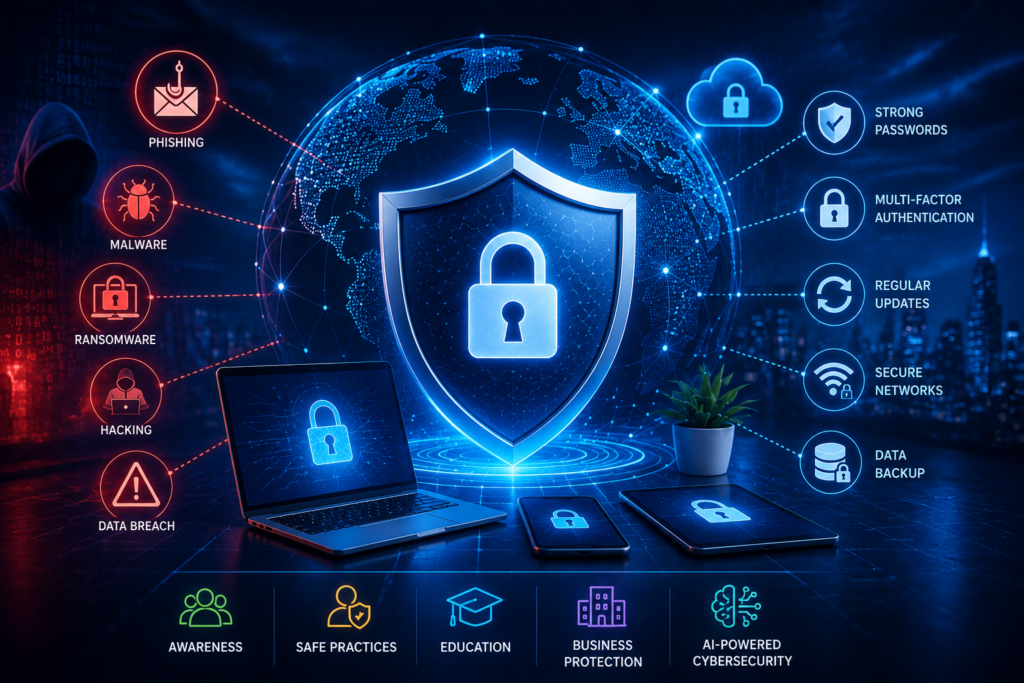
Digital information has become one of the most valuable assets in modern society. People share personal information online, businesses store customer records digitally, and organizations rely on computer networks and cloud platforms to operate their daily activities.
As the amount of digital information continues to grow, protecting it from unauthorized access, theft, alteration, and loss has become increasingly important. This is where information security comes into the picture.
If you are searching for what is a information security, the basic idea is simple: information security is the practice of protecting information and the systems used to store, process, and transmit it from unauthorized access, misuse, disruption, modification, or destruction.
New Info Technology USA provides informational content about cybersecurity, information technology, artificial intelligence, software, and other technologies that are shaping the digital world.
What Is Information Security?
Information security, often called InfoSec, is a broad area of technology focused on protecting information.
Information can exist in many forms. It may be stored in a computer database, printed on paper, saved on a smartphone, transferred through a network, or stored on a cloud platform.
Information security uses policies, technologies, processes, and security controls to protect this information.
The main goals of information security are generally based on three important principles:
- Confidentiality: Ensuring that information is accessible only to authorized people.
- Integrity: Ensuring that information remains accurate and is not improperly changed.
- Availability: Ensuring that authorized users can access information when they need it.
These three principles are commonly known as the CIA triad and form an important foundation of information security.
What Is Information Tech Security?
Information tech security is a broad term that can refer to the protection of information technology systems, including computers, networks, applications, devices, servers, and digital data.
It overlaps significantly with information security and cybersecurity.
For example, information tech security can involve protecting:
- Computers and laptops
- Servers and databases
- Business networks
- Cloud infrastructure
- Mobile devices
- Software applications
- Digital accounts
- Company information
- Customer data
The exact scope can vary depending on how an organization uses the term, but the central objective is protecting technology and information from security risks.
Why Does Information Security Matter?
1. It Protects Sensitive Information
Organizations collect and store different types of sensitive information. This can include customer details, financial records, login credentials, business documents, and employee information. Without appropriate security controls, unauthorized individuals could potentially access or misuse this information.
Information security helps organizations establish safeguards for sensitive data and control who can access it.
2. It Helps Prevent Unauthorized Access
Unauthorized access occurs when someone gains access to information or systems without appropriate permission. Strong passwords, multi-factor authentication, access controls, encryption, and identity management can help reduce this risk.
Organizations can also use role-based access controls to ensure that employees receive access to the information required for their responsibilities.
3. It Helps Maintain Data Integrity
Information needs to remain accurate and reliable. Imagine a business database containing incorrect customer or financial information because someone changed records without authorization. Such changes could affect business decisions and daily operations.
Information security controls can help detect unauthorized modifications and protect important data from improper changes.
4. It Supports Business Continuity
Modern businesses depend heavily on technology. A security incident that affects servers, applications, networks, or data can interrupt normal operations. Security measures such as backups, access controls, monitoring, recovery procedures, and incident response planning can help organizations prepare for potential disruptions.
Information security is therefore connected not only to data protection but also to the continued operation of digital businesses.
Common Information Security Threats
Information security threats can come from different sources. Some involve malicious activity, while others result from mistakes or weaknesses in systems.
Common threats include:
Phishing
Phishing uses deceptive emails, messages, websites, or other communications to persuade people to reveal information or perform an unsafe action.
Malware
Malware is malicious software designed to perform harmful or unauthorized activities. Examples include viruses, trojans, spyware, and ransomware.
Weak Passwords
Weak or reused passwords can make accounts easier to compromise, particularly when users use the same credentials across multiple services.
Insider Risks
Security risks can also come from within an organization. An employee or other authorized user may accidentally or intentionally expose information.
Data Breaches
A data breach occurs when sensitive or protected information is accessed, disclosed, or obtained without authorization.
Unpatched Software
Software vulnerabilities can create opportunities for attackers when security updates are not applied in a timely manner.
Key Areas of Information Security
Information security covers many different areas of technology and organizational security.
Network Security
Network security focuses on protecting networks and the communications that travel through them. Firewalls, monitoring systems, access controls, and network segmentation can all contribute to network security.
Application Security
Application security focuses on protecting software from vulnerabilities and unauthorized activity. Secure development practices and security testing can help identify weaknesses.
Data Security
Data security focuses specifically on protecting information from unauthorized access, alteration, disclosure, or destruction. Encryption, access controls, backups, and data classification are examples of data security measures.
Cloud Security
Many organizations now use cloud services to store information and operate applications. Cloud security focuses on protecting cloud environments, accounts, configurations, applications, and data.
Endpoint Security
Computers, smartphones, tablets, and other connected devices can become targets for cyber threats. Endpoint security helps protect these devices and monitor suspicious activity.
Information Security vs Cybersecurity
Information security and cybersecurity are closely related, but they are not always exactly the same. Information security generally focuses on protecting information in different forms, whether digital or physical.
Cybersecurity generally focuses more specifically on protecting digital systems, networks, devices, applications, and data from cyber threats. For example, protecting a confidential printed document can fall under information security, while protecting a computer network from malware is a cybersecurity activity.
There is significant overlap between the two areas, which is why the terms are sometimes used interchangeably.
Best Practices for Better Information Security
Individuals and organizations can take several basic steps to improve information security.
Use Strong and Unique Passwords
Use different passwords for important accounts and avoid easily guessed information.
Enable Multi-Factor Authentication
Multi-factor authentication adds an additional verification step beyond a password, making unauthorized account access more difficult.
Keep Software Updated
Security updates can address known vulnerabilities. Keeping operating systems, applications, browsers, and security software updated is an important security practice.
Back Up Important Data
Regular backups can help organizations and individuals recover important information after accidental deletion, hardware failure, or certain cyber incidents.
Limit Access
Users should generally receive only the access necessary for their responsibilities. Limiting unnecessary access can reduce exposure if an account is compromised.
Be Careful With Emails and Links
Unexpected emails, attachments, login requests, and links should be treated carefully. Checking the sender and destination before interacting can help reduce phishing risks.
The Growing Role of Information Security
Technology continues to develop through artificial intelligence, cloud computing, connected devices, mobile applications, automation, and other innovations. These technologies create new opportunities but can also introduce new security considerations.
As organizations become more dependent on digital systems, information security becomes an ongoing process rather than a one-time activity. Security teams need to monitor systems, identify vulnerabilities, update controls, educate users, and respond to incidents.
The growing importance of information technology also means that information tech security will remain an important area for organizations and technology professionals.
Conclusion
Information security is the practice of protecting information and the systems that handle it from unauthorized access, misuse, modification, disruption, and loss.
Understanding what is a information security helps beginners recognize why protecting information is essential in today’s digital environment. From personal accounts and business databases to cloud platforms and connected devices, information security affects almost every part of modern technology.
Information tech security, cybersecurity, data protection, and related security practices work together to create safer digital environments. As technology continues to evolve, understanding basic security principles can help individuals and organizations make more informed decisions about protecting their information.
New Info Technology USA shares informational resources covering cybersecurity, information technology, artificial intelligence, software, and other developments across the technology landscape.
Frequently Asked Questions
What is information security in simple words?
Information security is the practice of protecting information from unauthorized access, improper use, modification, disclosure, disruption, or destruction.
What are the three principles of information security?
The three major principles are confidentiality, integrity, and availability. Together, they are commonly known as the CIA triad.
What is information tech security?
Information tech security refers broadly to protecting information technology systems, devices, networks, applications, and digital information from security risks.
Is information security the same as cybersecurity?
They are closely related but have different scopes. Information security focuses on protecting information in various forms, while cybersecurity generally focuses on protecting digital systems, networks, devices, and data from cyber threats.
Why is information security important for businesses?
Information security helps businesses protect sensitive information, control access to systems, reduce security risks, maintain data integrity, and prepare for potential security incidents.
How can individuals improve information security?
Individuals can improve security by using strong unique passwords, enabling multi-factor authentication, keeping software updated, backing up important information, and being cautious with suspicious emails, links, and attachments.