In today’s connected world, technology plays a vital role in our everyday lives. From online shopping and digital banking to remote work, social media, and cloud storage, we rely on the internet for countless daily activities. However, as our digital presence grows, so do the risks of cyberattacks, data breaches, and online scams. That’s why understanding what is cybersecurity is more important than ever. Whether you’re a student, professional, business owner, or casual internet user, cybersecurity helps protect your personal information, devices, and online accounts from evolving cyber threats.
At New Info Technology, our goal is to explain complex technology topics in a simple and easy-to-understand way. Whether you’re using a smartphone, laptop, or smart home device, cybersecurity helps keep your data and digital life safe. In this beginner-friendly guide, you’ll learn what cybersecurity is, why it matters, common cyber threats, cybersecurity risks, the importance of cybersecurity awareness, and how AI cybersecurity is shaping the future of digital protection.
What Is Cybersecurity?
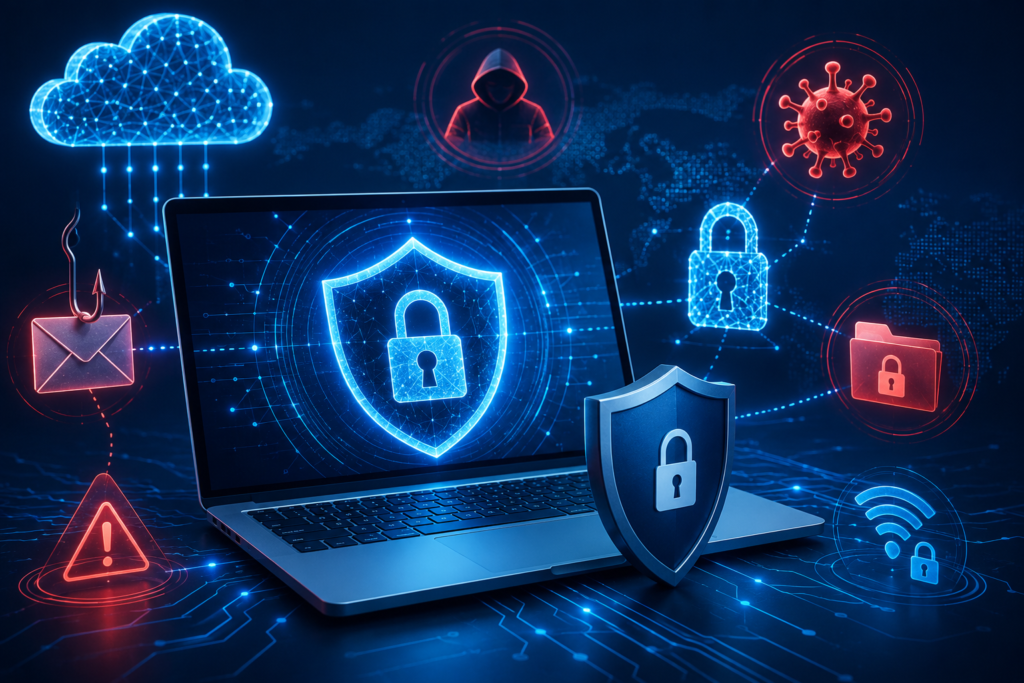
Cybersecurity is the process of protecting computers, smartphones, servers, networks, software, and digital information from cyber threats such as hacking, malware, phishing, and unauthorized access. Its primary purpose is to keep your data secure, maintain your privacy, and ensure that digital systems continue to operate safely and reliably.
Think of cybersecurity as the digital version of locking your home’s doors and windows. Just as locks protect your house from intruders, cybersecurity protects your devices and online accounts from hackers and malicious software.
Cybersecurity includes a combination of:
- Security software
- Safe online practices
- Network protection
- Data encryption
- Regular software updates
- User education
Why Is Cybersecurity Important?
As more personal and business activities move online, cyberattacks continue to increase worldwide. Criminals target individuals, businesses, schools, hospitals, and even governments.
Cybersecurity helps protect:
- Personal information
- Financial accounts
- Business data
- Customer records
- Online identities
- Cloud storage
- Smart devices
Without proper cybersecurity, users may experience identity theft, financial loss, privacy violations, or permanent data loss.
What Is a Cybersecurity Threat?
A cybersecurity threat is anything that has the potential to harm digital systems, networks, or sensitive information. Threats may come from cybercriminals, malicious software, insiders, or even accidental human mistakes.
Common Types of Cybersecurity Threats
1. Phishing: Phishing attacks use fake emails, websites, or messages to trick users into revealing passwords, banking information, or personal details.
2. Malware: Malware is malicious software designed to damage devices or steal information.
3. Ransomware: Ransomware encrypts files and demands payment before restoring access.
Businesses and hospitals are frequent targets of ransomware attacks.
4. Password Attacks: Hackers attempt to guess or steal passwords using automated tools or leaked password databases.
5. Data Breaches: A data breach occurs when unauthorized individuals gain access to confidential information.
6. Social Engineering: Instead of attacking computers directly, cybercriminals manipulate people into revealing sensitive information.
Common Causes of Cybersecurity Incidents
Many cyber incidents occur because of simple mistakes rather than advanced hacking.
Common causes include:
- Weak passwords
- Ignoring software updates
- Downloading files from unknown sources
- Opening suspicious email attachments
- Using unsecured networks
- Sharing personal information online
Even small security habits can significantly reduce the chances of becoming a victim.
Types of Cybersecurity
Cybersecurity includes several specialized areas.
Network Security: Protects computer networks from unauthorized access and cyberattacks.
- Application Security: Ensures software and mobile apps are designed with security in mind.
- Cloud Security: Protects data stored on cloud platforms from unauthorized access.
- Information Security: Focuses on protecting sensitive information regardless of where it is stored.
- Endpoint Security: Protects individual devices such as laptops, smartphones, and tablets.
- Internet of Things (IoT) Security: Secures internet-connected devices such as smart TVs, cameras, and home assistants.
AI Cybersecurity: How Artificial Intelligence Is Changing Digital Security
AI cybersecurity is the use of artificial intelligence and machine learning to detect, prevent, and respond to cyber threats more quickly and accurately.
Traditional security systems often rely on predefined rules. AI-powered cybersecurity can analyze massive amounts of data in real time and identify unusual behavior that may indicate an attack.
Benefits of AI Cybersecurity
- Faster threat detection
- Real-time monitoring
- Improved fraud detection
- Automated security responses
- Reduced workload for security teams
- Better identification of unusual network activity
Challenges of AI Cybersecurity
While AI offers many advantages, attackers can also use AI to create more convincing phishing emails, automate attacks, or discover system vulnerabilities.
Because of this, cybersecurity professionals combine AI tools with human expertise for stronger protection.
Cybersecurity Careers
Popular cybersecurity careers include:
- Security Analyst
- Ethical Hacker
- Penetration Tester
- Security Engineer
- Incident Response Analyst
- Security Consultant
- Cloud Security Specialist
These professionals help organizations identify vulnerabilities, prevent attacks, and recover from security incidents.
Common Cybersecurity Myths
Myth 1: Only Large Companies Get Hacked
Small businesses and individuals are also common targets.
Myth 2: Antivirus Alone Is Enough
Effective cybersecurity requires multiple layers of protection, including updates, strong passwords, and safe online behavior.
Myth 3: Macs and Smartphones Cannot Be Hacked
No device is completely immune to cyber threats.
Myth 4: Strong Passwords Are Optional
Weak passwords remain one of the leading causes of compromised accounts.
Final Thoughts
Understanding what is cybersecurity is the first step toward staying safe in today’s connected world. Cybersecurity is more than just antivirus software—it’s a combination of technology, safe online habits, and continuous learning.
By understanding what is cybersecurity risk, recognizing what is a cybersecurity threat, practicing cybersecurity awareness, and learning how AI cybersecurity is improving digital defense, beginners can confidently protect their devices, personal information, and online accounts.
Cybersecurity is an ongoing process, not a one-time task. Developing good security habits today will help protect you against the evolving cyber threats of tomorrow.
Frequently Asked Questions
1. What is cybersecurity?
Cybersecurity is the practice of protecting computers, smartphones, networks, software, and digital data from cyberattacks, unauthorized access, and data theft. It uses technologies, security tools, and safe online practices to keep information secure.
2. Why is cybersecurity important?
Cybersecurity is important because it protects personal information, financial data, business systems, and online accounts from hackers, malware, phishing attacks, and other cyber threats. It also helps maintain privacy and prevents financial losses.
3. What is cybersecurity risk?
A cybersecurity risk is the possibility that a cyberattack or security weakness could lead to data loss, financial damage, or disruption of digital systems. Weak passwords, outdated software, and phishing scams are common examples of cybersecurity risks.
4. What is a cybersecurity threat?
A cybersecurity threat is any activity, event, or malicious actor that can compromise the security of computers, networks, or data. Common threats include malware, ransomware, phishing, data breaches, and social engineering attacks.
5. What is cybersecurity awareness?
Cybersecurity awareness is the knowledge and understanding of online security threats and the best practices to avoid them. It includes recognizing phishing emails, creating strong passwords, enabling multi-factor authentication, and keeping software updated.