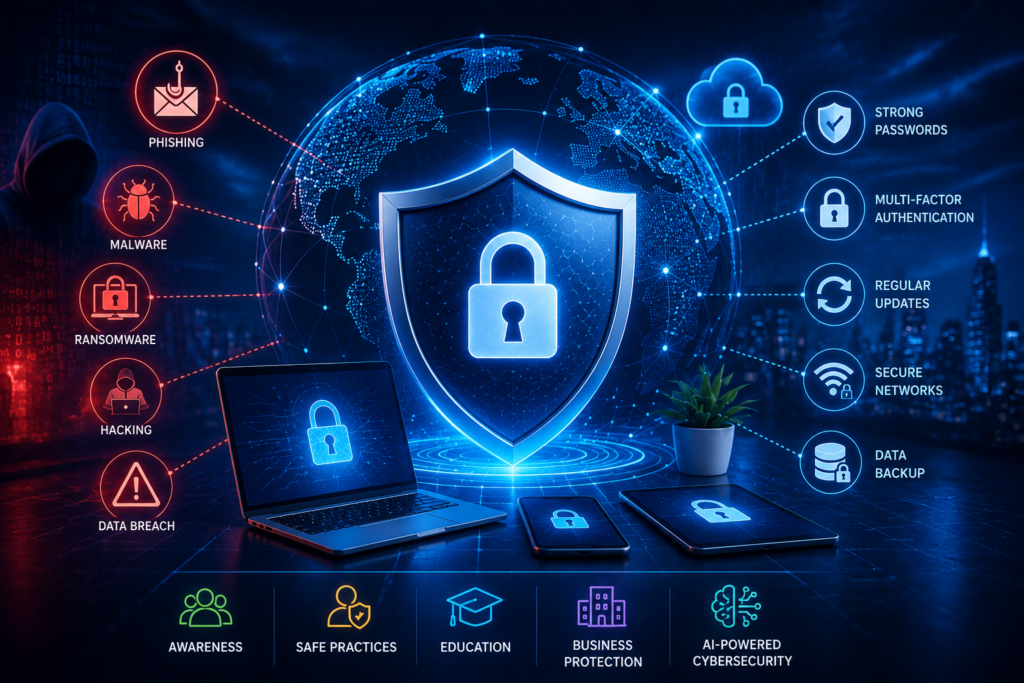
Mobile devices have become an important part of everyday life. Smartphones and tablets are used for communication, online banking, shopping, business activities, social media, cloud applications, and storing personal information. As mobile technology continues to develop, cyber threats targeting mobile devices and platforms are also becoming more sophisticated.
This is where ethical hacking plays an important role. Ethical hackers legally test mobile applications, operating systems, networks, and devices to identify security weaknesses before malicious attackers can exploit them. By finding vulnerabilities in a controlled environment, organizations can improve their security and protect sensitive information.
At New Info Technology US, we explore how technologies such as cybersecurity and ethical hacking are changing the way people and organizations protect digital systems.
What Is Ethical Hacking?
Ethical hacking is the authorized process of identifying and testing security vulnerabilities in computer systems, networks, applications, and digital devices.
Unlike malicious hackers, ethical hackers work with permission from the system owner. Their objective is to discover weaknesses and provide information that can help developers and security teams fix those weaknesses.
Ethical hacking may involve testing:
- Mobile applications
- Smartphones and tablets
- Operating systems
- Wireless networks
- Cloud platforms
- APIs
- Web applications
- Authentication systems
- Data storage and communication channels
The main purpose is to improve security rather than cause damage.
Why Are Mobile Devices Important for Cybersecurity?
Mobile devices contain a large amount of sensitive information. A single smartphone may contain personal messages, photographs, emails, financial applications, passwords, business documents, and authentication information.
Mobile devices can also connect to many different networks and services. For example, users may switch between cellular networks, public Wi-Fi, home networks, Bluetooth devices, and cloud services. This creates multiple areas that security professionals need to consider.
Common mobile security risks include:
- Weak passwords or authentication
- Malicious applications
- Outdated operating systems
- Unsafe Wi-Fi networks
- Data leakage
- Insecure APIs
- Excessive application permissions
- Phishing attacks
- Unencrypted communication
- Compromised accounts
Ethical hacking helps organizations identify weaknesses associated with these areas.
How Ethical Hacking Protects Mobile Devices and Platforms
1. Identifying Mobile Application Vulnerabilities
Mobile applications often handle sensitive information. An insecure application could expose user data or communicate with an unsafe server. Ethical hackers can test applications in authorized environments to identify weaknesses related to authentication, authorization, data storage, APIs, and communication.
Security teams can then address these vulnerabilities before the application is exposed to greater risk.
2. Testing Authentication and Login Security
Authentication is an important part of mobile security. Applications commonly use passwords, PINs, biometrics, multi-factor authentication, or other mechanisms to verify users.
Ethical hackers can evaluate whether authentication controls are implemented correctly. They may examine issues such as weak authentication logic, poor session management, or improperly protected credentials.The findings can help developers strengthen the login process.
3. Examining Data Storage
Mobile applications may store information locally on a device. If sensitive data is stored improperly, it may create security risks. Ethical hacking can help determine whether important information is adequately protected when stored on a device. Developers can use the findings to improve encryption, storage practices, access controls, and data-handling procedures.
4. Testing Network Communication
Mobile applications frequently communicate with remote servers through the internet. Ethical hackers can examine whether communications are appropriately protected and whether applications properly validate connections.
This type of testing can help identify weaknesses that could potentially expose information during communication between a mobile application and its backend services.
5. Finding API Security Weaknesses
APIs allow mobile applications to communicate with backend systems. Because APIs often handle user accounts and sensitive information, they are an important part of mobile application security.
Ethical hackers can assess authorized APIs for weaknesses involving authentication, authorization, input validation, access controls, and data exposure. Fixing these issues can reduce opportunities for unauthorized access.
Ethical Hacking Mobile Devices and Platforms
Ethical hacking is not limited to applications. Security testing can also involve the underlying mobile platforms and their configurations. Mobile platforms include operating systems such as Android and iOS, along with their associated application ecosystems and security controls.
Security professionals may examine areas such as:
- Operating system configurations
- Application permissions
- Device security settings
- Authentication mechanisms
- Wireless connectivity
- Mobile device management
- Application installation controls
- Data protection
- Security updates
Testing should always be performed with appropriate authorization and within a defined scope.
Ethical Hacking Essentials
Several principles are essential when performing ethical hacking.
Authorization
Ethical hackers must have permission before testing a device, application, network, or platform. Testing systems without authorization can create legal and security problems.
Defined Scope
A security assessment should clearly establish what can and cannot be tested. This may include specific applications, devices, accounts, networks, or environments.
Vulnerability Identification
The purpose of testing is to identify weaknesses that could create security risks.
Documentation
Ethical hackers document their findings, including the affected component, security issue, potential impact, and recommended remediation.
Responsible Disclosure
Security vulnerabilities should be communicated responsibly to the relevant organization or development team so they can be addressed.
Benefits of Ethical Hacking for Mobile Security
Ethical hacking can provide several benefits for organizations developing or managing mobile technologies.
Better Vulnerability Management
Security teams can discover weaknesses and prioritize remediation based on their potential impact.
Improved Application Security
Testing can identify security problems before or during the development lifecycle, helping developers build more secure applications.
Protection of Sensitive Data
Identifying weaknesses in storage, authentication, and communication can help organizations strengthen controls around sensitive information.
Reduced Security Risk
Regular security assessments can help organizations understand their attack surface and address weaknesses before they become larger security problems.
Greater Security Awareness
Ethical hacking reports can help developers, administrators, and organizations understand how security weaknesses can affect their systems.
Ethical Hacking in Mobile Application Development
Security should not be considered only after an application has been launched. It can be incorporated throughout the software development lifecycle. Developers can use security testing during planning, development, testing, deployment, and maintenance.
For example, a development team may perform security reviews before releasing an application. After deployment, periodic assessments can help identify newly introduced vulnerabilities or risks caused by changes to the application or its infrastructure.
This approach is often associated with DevSecOps, where security is integrated into development and operations processes.
Challenges in Mobile Ethical Hacking
Mobile security testing can be challenging because mobile ecosystems are constantly changing.
New operating-system versions, applications, APIs, devices, and security mechanisms can introduce new considerations for security teams.
Other challenges include:
- Large numbers of mobile devices
- Different operating-system versions
- Third-party applications
- Complex backend systems
- Cloud-connected applications
- Rapid software updates
- Evolving cyber threats
- User privacy requirements
Because of these challenges, organizations often need continuous security monitoring and periodic testing rather than relying on a single security assessment.
Best Practices for Protecting Mobile Devices
Ethical hacking is one part of a broader mobile security strategy. Users and organizations can also follow basic security practices.
These include:
- Keep operating systems and applications updated.
- Use strong passwords and multi-factor authentication.
- Install applications from trusted sources.
- Review application permissions.
- Avoid connecting to unknown or unsecured networks when handling sensitive information.
- Use device encryption where available.
- Enable device-lock features.
- Back up important data securely.
- Remove applications that are no longer needed.
- Educate users about phishing and social engineering.
Organizations can additionally use mobile device management and security policies to manage company-owned or business-connected devices.
The Role of Ethical Hackers in Modern Cybersecurity
Ethical hackers act as authorized security testers. Their work can help organizations look at their systems from an attacker’s perspective while keeping the assessment controlled and legitimate.
The goal is not simply to find problems. A useful security assessment should help an organization understand the weakness, determine its potential impact, and take appropriate steps to reduce the risk.
As mobile devices become increasingly connected to cloud services, business applications, and digital identities, this type of security testing continues to have an important role in cybersecurity.
Conclusion of Ethical Hacking
Ethical hacking can help protect mobile devices and platforms by identifying security weaknesses before they are exploited by malicious attackers. Through authorized testing of applications, authentication systems, APIs, data storage, network communication, and device configurations, security professionals can provide valuable information to developers and organizations.
However, ethical hacking should be part of a broader cybersecurity strategy. Regular updates, strong authentication, secure development practices, user awareness, encryption, access controls, and continuous monitoring are also important.
As mobile technology continues to evolve, understanding how ethical hacking protects mobile devices and platforms can help organizations build safer applications and more resilient digital environments.
Frequently Asked Questions
What is ethical hacking in mobile security?
Ethical hacking in mobile security involves authorized testing of mobile devices, applications, operating systems, and related services to identify security vulnerabilities and help organizations fix them.
How does ethical hacking protect mobile applications?
Ethical hackers test areas such as authentication, authorization, data storage, APIs, network communication, and application configurations to identify potential weaknesses.
Why is ethical hacking important for mobile devices?
Mobile devices can contain sensitive personal and business information. Ethical hacking can help identify vulnerabilities that may otherwise expose this information to security threats.
What are the essentials of ethical hacking?
Important ethical hacking essentials include authorization, defined testing scope, vulnerability identification, proper documentation, responsible disclosure, and remediation.
Can ethical hacking prevent every mobile security threat?
No. Ethical hacking can identify many security weaknesses, but it cannot guarantee complete protection from every future threat. Mobile security requires ongoing updates, monitoring, secure development, and user awareness.
Is ethical hacking legal?
Ethical hacking is generally conducted legally when the tester has explicit authorization and operates within the agreed scope. Testing systems without permission can have legal consequences.