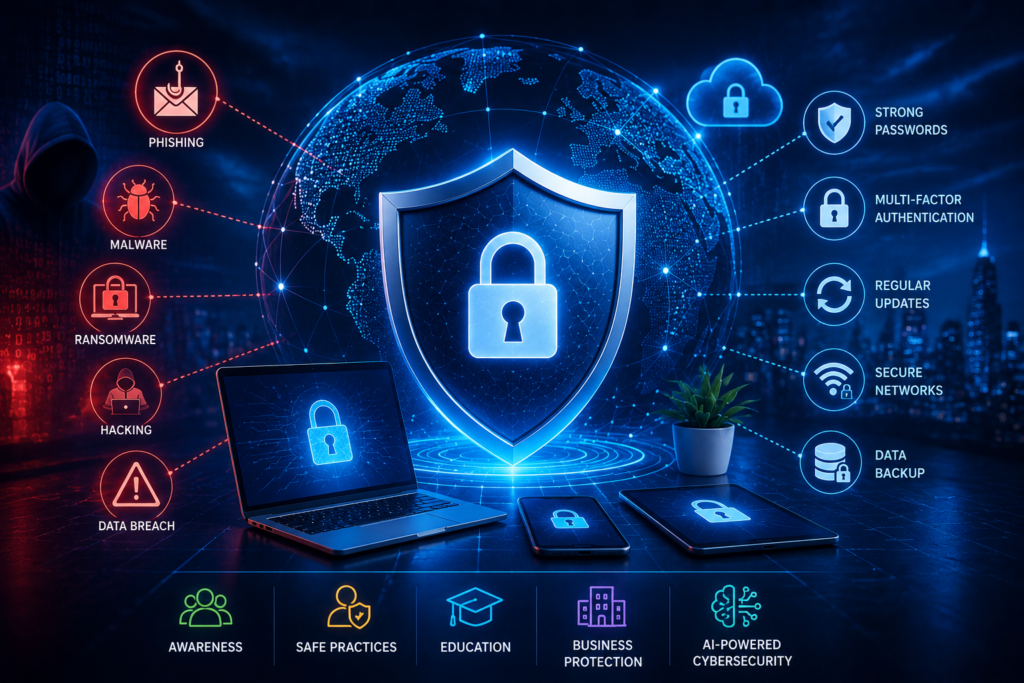
In today’s digital world, cyber threats are growing faster than ever. Businesses, governments, and individuals rely on technology for communication, banking, healthcare, and daily operations. As cybercriminals continue to develop new attack methods, organizations need experts who can identify security weaknesses before hackers exploit them. This is where ethical hacking plays a vital role.
This beginner’s guide explains what is ethical hacking, its importance, how it works, the ethical hacking definition, the different types of ethical hackers, and the benefits of ethical hacking. If you want to learn ethical hacking, this guide from New Info Technology USA will help you understand the fundamentals and how ethical hackers strengthen cybersecurity.
What Is Ethical Hacking?
The answer to what is ethical hacking is simple: it is the legal and authorized process of testing computer systems, applications, and networks to identify security vulnerabilities before malicious hackers can exploit them. Ethical hackers use the same techniques and tools as cybercriminals, but they operate with permission from the organization. Their objective is not to steal information or damage systems but to improve security by discovering and reporting weaknesses.
Unlike malicious hackers, ethical hackers follow legal guidelines and maintain complete confidentiality while performing security assessments.
Ethical Hacking Definition
The ethical hacking definition refers to the authorized practice of identifying, testing, and fixing vulnerabilities in digital systems using hacking techniques while following legal and ethical standards.
Ethical hacking is often called penetration testing or white-hat hacking because ethical hackers work to protect organizations instead of attacking them. Their findings help businesses improve security policies, patch vulnerabilities, and reduce cyber risks.
Why Is Ethical Hacking Important?
As more personal and business activities move online, cyberattacks continue to increase worldwide. Criminals target individuals, businesses, schools, hospitals, and even governments.

Ethical hacking helps organizations:
- Detect vulnerabilities before attackers do.
- Prevent costly cyberattacks.
- Protect confidential information.
- Meet cybersecurity compliance requirements.
- Improve overall network security.
- Strengthen customer confidence.
Without regular ethical hacking assessments, businesses may unknowingly leave critical security gaps exposed.
How Does Ethical Hacking Work?
Ethical hackers follow a structured process to evaluate system security.
1. Planning and Reconnaissance
The first step involves gathering information about the target system. Ethical hackers identify domains, IP addresses, servers, operating systems, applications, and possible attack points.
2. Scanning
They use specialized tools to scan the network and identify open ports, outdated software, configuration errors, and potential vulnerabilities.
3. Gaining Access
Ethical hackers attempt to exploit discovered weaknesses in a controlled environment to determine whether attackers could gain unauthorized access.
4. Maintaining Access
This phase evaluates whether an attacker could remain inside the system without being detected, helping organizations understand long-term security risks.
5. Reporting
The final stage involves documenting every vulnerability, explaining its severity, and recommending practical solutions to eliminate security risks.
Types of Ethical Hackers
Ethical hackers are commonly classified based on their roles and responsibilities.
White Hat Hackers
White hat hackers work legally with permission from organizations. Their mission is to improve cybersecurity by identifying weaknesses before criminals can exploit them.
Gray Hat Hackers
Gray hat hackers may discover vulnerabilities without permission but generally report them instead of using them for personal gain. Their activities may still violate legal boundaries.
Black Hat Hackers
Black hat hackers are cybercriminals who exploit vulnerabilities to steal data, spread malware, commit fraud, or damage systems. Ethical hackers work to stop these threats.
Common Ethical Hacking Techniques
Ethical hackers use various techniques during security assessments, including:
- Network scanning
- Vulnerability assessment
- Penetration testing
- Password security testing
- Social engineering simulations
- Web application testing
- Wireless network security testing
- Malware analysis
- Security configuration review
Popular Ethical Hacking Tools
- Professionals use several industry-standard tools during security testing.
- Some popular tools include:
- Nmap
- Wireshark
- Burp Suite
- Metasploit Framework
- Nessus
- John the Ripper
- Aircrack-ng
- Nikto
- OWASP ZAP
Benefits of Ethical Hacking
The benefits of ethical hacking extend across every industry and organization size.
Improves Security
Ethical hackers identify vulnerabilities before cybercriminals can exploit them, significantly improving system protection.
Prevents Data Breaches
Organizations can secure sensitive customer and business information by fixing vulnerabilities early.
Reduces Financial Losses
Preventing cyberattacks saves businesses from recovery costs, legal penalties, and reputational damage.
Ensures Regulatory Compliance
Many industries require regular security assessments to comply with regulations such as GDPR, HIPAA, and PCI DSS.
Protects Business Reputation
Strong cybersecurity increases customer confidence and demonstrates an organization’s commitment to protecting personal information.
Supports Continuous Improvement
Ethical hacking encourages businesses to continuously monitor and strengthen their cybersecurity infrastructure.
How to Learn Ethical Hacking
Many beginners want to learn ethical hacking because cybersecurity offers exciting career opportunities. Building expertise requires both theoretical knowledge and practical experience.
Here are some recommended steps to learn ethical hacking:
Understand Networking
Learn how computer networks, IP addresses, DNS, routers, switches, and firewalls operate.
Learn Operating Systems
Become comfortable with Linux and Windows environments, as most security testing involves these platforms.
Study Programming
Languages such as Python, JavaScript, Bash, SQL, and C help automate security tasks and understand application vulnerabilities.
Practice in Safe Environments
Use legal practice platforms such as Capture The Flag (CTF) labs and virtual machines to develop hands-on skills.
Learn Cybersecurity Fundamentals
Study topics including cryptography, authentication, web security, cloud security, and network defense.
Career Opportunities in Ethical Hacking
The demand for ethical hackers continues to grow worldwide. Organizations across finance, healthcare, government, technology, and e-commerce actively hire cybersecurity professionals.
Common career roles include:
- Ethical Hacker
- Penetration Tester
- Cybersecurity Analyst
- Security Consultant
- Information Security Engineer
- Network Security Engineer
- Application Security Specialist
- Vulnerability Assessment Analyst
As cyber threats increase, skilled ethical hackers remain among the most sought-after IT professionals.
Conclusion
Understanding what is ethical hacking is essential in today’s technology-driven world. Ethical hackers play a critical role in protecting businesses, governments, and individuals from increasingly sophisticated cyber threats. By following the proper ethical hacking definition, organizations can proactively identify vulnerabilities, strengthen security, and minimize the risk of costly data breaches.
Whether you are a student, IT professional, or business owner looking to learn ethical hacking, developing cybersecurity skills can open exciting career opportunities while contributing to a safer digital environment. At New Info Technology USA, we believe that ethical hacking is not about breaking systems it is about building stronger defenses, protecting valuable information, and creating a more secure future for everyone.
Frequently Asked Questions
1. What is ethical hacking?
Ethical hacking is the authorized process of testing computer systems and networks to identify and fix security vulnerabilities before malicious hackers can exploit them.
2. What is the ethical hacking definition?
The ethical hacking definition is the legal practice of using hacking techniques with permission to evaluate and improve the security of digital systems.
3. What are the benefits of ethical hacking?
The benefits of ethical hacking include improved cybersecurity, prevention of data breaches, regulatory compliance, reduced financial losses, and stronger customer trust.
4. How can beginners learn ethical hacking?
Beginners can learn ethical hacking by studying networking, operating systems, programming, cybersecurity fundamentals, practicing in labs, and earning professional certifications.
5. Is ethical hacking a good career?
Yes. Ethical hacking is one of the fastest-growing cybersecurity careers, offering excellent job opportunities, competitive salaries, and long-term career growth.