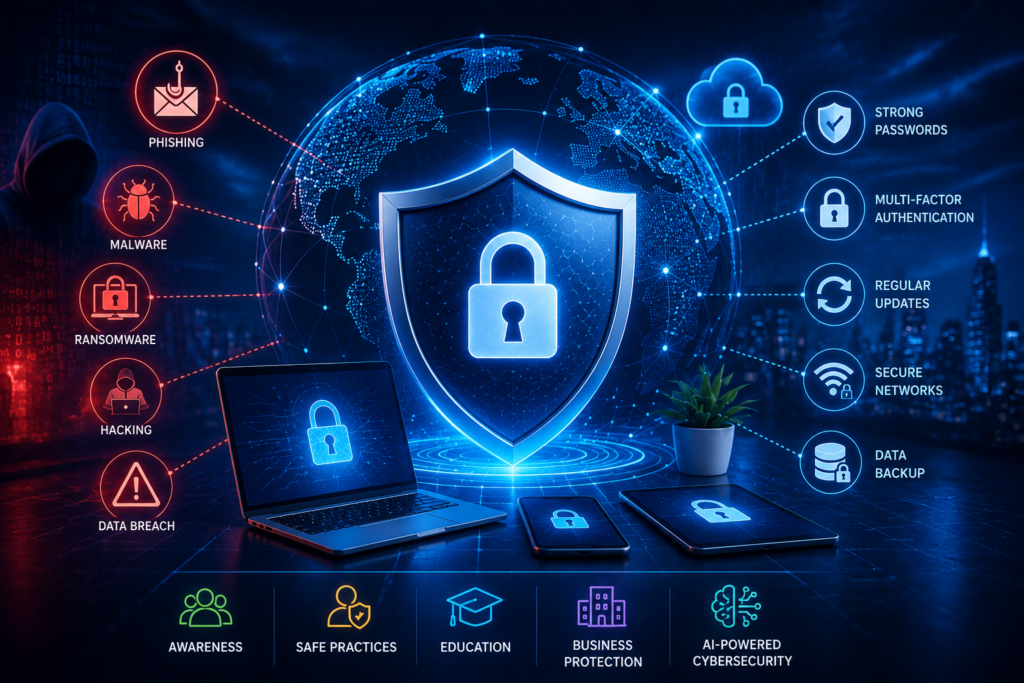
In today’s digital world, information is one of the most valuable assets for individuals, businesses, and organizations. Personal details, financial records, customer information, business documents, passwords, and other sensitive data are stored and exchanged through computers, mobile devices, networks, applications, and cloud platforms. As technology continues to develop, understanding the need of information security has become increasingly important.
Information security helps protect information from unauthorized access, misuse, modification, disclosure, disruption, and destruction. It combines security policies, technologies, processes, and controls to create safer digital environments.
New Info Technology USA provides informational resources covering information technology, cybersecurity, artificial intelligence, software, and other developments across the technology landscape. Understanding the information security applications used in modern technology can help individuals and organizations better understand how digital information is protected.
What Is Information Security?
Information security, often called InfoSec, is the practice of protecting information and the systems used to store, process, and transmit it.
Information can exist in different forms. It may be stored in databases, saved on smartphones and computers, transferred through networks, kept in cloud platforms, or even maintained in physical documents.
Information security generally focuses on three important principles:
- Confidentiality: Ensuring information is accessible only to authorized users.
- Integrity: Ensuring information remains accurate and is not changed improperly.
- Availability: Ensuring authorized users can access information when it is needed.
These three principles are commonly known as the CIA triad and provide an important foundation for information security.
What Is the Need of Information Security?
The need of information security has grown as businesses and individuals increasingly depend on digital technology.
Organizations may store customer information, financial records, employee details, login credentials, business documents, and other sensitive data. Without appropriate safeguards, this information may be exposed to unauthorized access, accidental loss, or security incidents.
Some important reasons for information security include:
1. Protecting Sensitive Data
Information security helps protect confidential and sensitive information from unauthorized access or disclosure. Security controls can help organizations manage who can access particular information and how that information is handled.
2. Preventing Unauthorized Access
Strong passwords, multi-factor authentication, access controls, encryption, and identity management can help reduce the possibility of unauthorized access to systems and information.
3. Maintaining Data Integrity
Businesses depend on accurate information for everyday operations and decision-making. Security controls can help detect and prevent unauthorized modifications to important data.
4. Supporting Business Continuity
Technology problems and security incidents can interrupt business operations. Backups, monitoring, recovery procedures, access controls, and incident response planning can help organizations prepare for potential disruptions.
5. Reducing Security Risks
Information security helps organizations identify potential weaknesses and establish controls to reduce exposure to common threats such as phishing, malware, weak passwords, data breaches, and unpatched software.
Information Security Applications in Modern Technology
There are many information security applications across modern technology. These applications help protect networks, devices, software, data, cloud platforms, and digital accounts.
1. Network Security
Network security focuses on protecting computer networks and the information traveling through them.
Firewalls, monitoring systems, access controls, and network segmentation are examples of technologies and practices used to improve network security.
Businesses use network security to help protect internal systems from unauthorized access and suspicious network activity.
2. Data Security
Data security focuses specifically on protecting information from unauthorized access, alteration, disclosure, or destruction.
Encryption, access controls, backups, and data classification can be used to protect important information.
For example, sensitive business or customer information can be protected through access restrictions and encryption so that only authorized users can work with it.
3. Application Security
Modern organizations rely on software applications for communication, business operations, customer services, and data management.
Application security focuses on identifying and reducing vulnerabilities in software. Secure development practices and security testing can help developers identify weaknesses before applications are widely deployed.
4. Cloud Security
Cloud computing has become an important part of modern technology. Organizations use cloud platforms to store information, operate applications, and support business processes.
Cloud security focuses on protecting cloud accounts, configurations, applications, infrastructure, and stored information.
Proper access controls, secure configurations, authentication, monitoring, and data protection practices can contribute to safer cloud environments.
5. Endpoint Security
Computers, laptops, smartphones, tablets, and other connected devices can become targets for cyber threats.
Endpoint security helps protect these devices and can include security software, monitoring, access controls, and other protective measures.
As employees increasingly use multiple devices to access business systems, endpoint security has become an important information security application.
6. Identity and Access Management
Organizations need to control who can access systems and information.
Identity and access management helps organizations authenticate users and manage their permissions. Role-based access controls can ensure that employees receive the access required for their responsibilities without unnecessarily exposing sensitive information.
7. Email and Phishing Protection
Email remains an important communication method for individuals and organizations, but it can also be used for phishing attacks. Phishing messages may attempt to persuade users to reveal passwords, click malicious links, download harmful files, or provide sensitive information.
Security awareness, email filtering, authentication, and careful verification of unexpected messages can help reduce phishing-related risks.
8. Backup and Recovery
Backups are another important application of information security. Regular backups can help individuals and organizations recover important information after accidental deletion, hardware failure, system problems, or certain cyber incidents.
A suitable recovery strategy can also contribute to business continuity when technology systems are disrupted.
Common Threats Addressed by Information Security
Information security applications are designed to help address many different security threats.
Some common threats include:
- Phishing: Deceptive messages or websites designed to persuade users to reveal information or perform unsafe actions.
- Malware: Malicious software such as viruses, spyware, trojans, and ransomware.
- Weak Passwords: Easily guessed or reused credentials that may make accounts more vulnerable.
- Insider Risks: Security risks caused by authorized users, whether accidentally or intentionally.
- Data Breaches: Unauthorized access to or disclosure of sensitive information.
- Unpatched Software: Vulnerabilities that may remain exposed when security updates are not applied.
Understanding these threats helps organizations determine which security controls and practices are appropriate for their environments.
Information Security in Everyday Technology
Information security is not limited to large businesses or technology companies. It also affects everyday technology use. When a person uses online banking, creates an email account, stores photos in cloud storage, shops online, or uses a smartphone application, information security can play a role in protecting their information.
Simple practices such as using strong and unique passwords, enabling multi-factor authentication, keeping software updated, backing up important data, and being cautious with suspicious links can improve personal information security.
Information Security and the Future of Technology
Technology continues to evolve through artificial intelligence, cloud computing, connected devices, automation, mobile applications, and other innovations. These technologies provide new opportunities while also creating new security considerations. As organizations become more dependent on digital systems, information security becomes an ongoing process rather than a one-time activity.
Organizations need to monitor systems, identify vulnerabilities, update security controls, educate users, and prepare for potential incidents. The growing dependence on technology means that the need of information security will continue to be an important consideration for businesses, technology professionals, and everyday users.
Conclusion
Information security plays an important role in protecting information and the technology used to store, process, and transmit it. From network security and data protection to cloud security, application security, endpoint protection, and identity management, there are many information security applications used in modern technology.
Understanding the need for information security can help individuals and organizations recognize the importance of protecting sensitive information, maintaining data integrity, controlling access, and preparing for potential security incidents.
New Info Technology USA shares informational resources about cybersecurity, information technology, artificial intelligence, software, and other technology developments to help readers understand the changing digital landscape.
Absolutely. Add this FAQ section at the end of the blog:
Frequently Asked Questions About Information Security
What is the need of information security?
The need of information security is to protect sensitive information from unauthorized access, misuse, modification, disclosure, disruption, and loss. It also helps organizations maintain data integrity, control access, and support business continuity.
What are the main applications of information security?
The main information security applications include network security, data security, application security, cloud security, endpoint security, identity and access management, email protection, and backup and recovery.
Why is information security important for businesses?
Information security helps businesses protect customer information, financial records, employee data, business documents, and other sensitive information. It also helps reduce security risks and prepare for potential technology disruptions.
What are the three principles of information security?
The three main principles are confidentiality, integrity, and availability. Together, these principles are commonly known as the CIA triad.
What is the role of New Info Technology USA in information security content?
New Info Technology USA provides informational resources covering information technology, cybersecurity, artificial intelligence, software, and other technology developments, helping readers understand topics related to the modern digital landscape.