
Technology has become an important part of everyday life. People use electronic devices for communication, entertainment, education, work, shopping, travel, and managing their homes. From smartphones and laptops to smart TVs, wireless earbuds, smartwatches, and connected home appliances, electronic products are now part of almost every modern household.
Consumer electronics are electronic products designed primarily for personal or household use. They are developed to perform everyday functions, provide entertainment, improve productivity, connect people, and make daily activities more convenient.
In this guide, New Info Technology explores the meaning of consumer electronics, their major types, benefits, evolution, role of artificial intelligence and IoT, consumer electronics marketing, and the trends shaping their future.
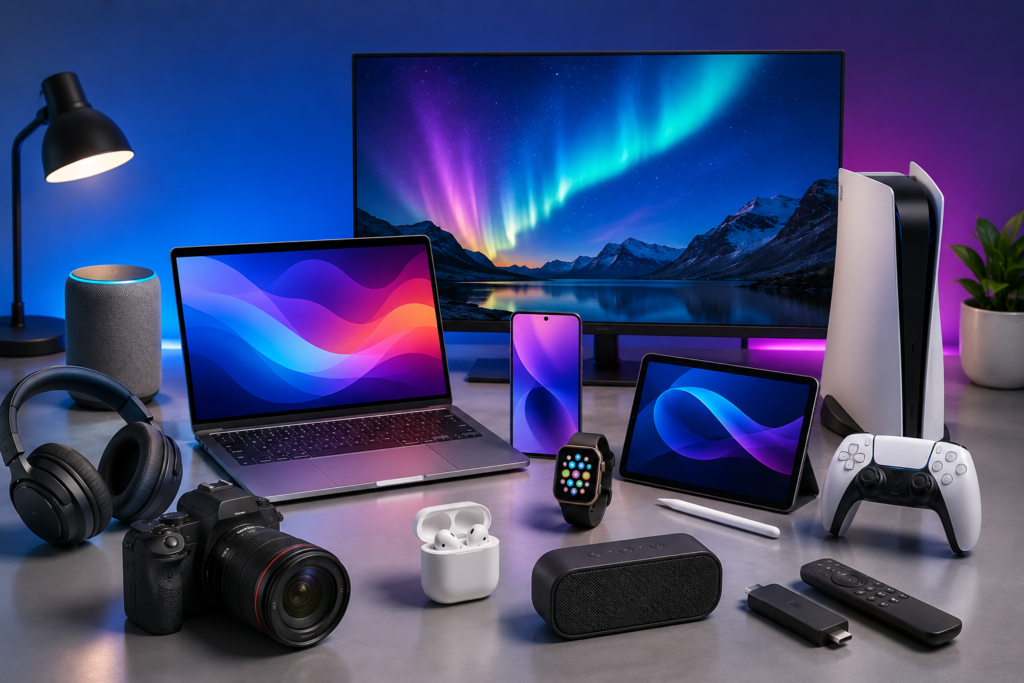
What Are Consumer Electronics?
Consumer electronics are electronic devices and products designed for use by individuals or households. These products typically use electronic circuits, processors, sensors, software, displays, batteries, or wireless technologies to perform specific functions.
Some consumer electronics perform a single primary function, while modern devices can perform many different tasks.
For example, a traditional digital camera is mainly designed for taking photographs. A modern smartphone, however, can take photos, make calls, browse the internet, stream videos, play games, make payments, navigate using GPS, and run thousands of applications.
Common examples of consumer electronics include:
- Smartphones
- Laptops and desktop computers
- Tablets
- Smart televisions
- Digital cameras
- Headphones and wireless earbuds
- Smartwatches
The consumer electronics industry continues to expand as new technologies become available and existing devices become smarter and more connected.
Why Are Consumer Electronics Important?
Consumer electronics have changed the way people interact with technology and with one another. Many activities that previously required separate devices or physical processes can now be completed using connected electronic products.
For example, a smartphone can replace several traditional devices, including a camera, calculator, GPS navigator, music player, alarm clock, and even a physical wallet in some situations.
Consumer electronics are important because they provide convenience, connectivity, productivity, and entertainment.
Communication
Smartphones, tablets, computers, and other connected devices allow people to communicate almost instantly. Video calls, messaging applications, email, and social media have made communication faster and more accessible.
Productivity
Computers, laptops, tablets, and smartphones help people complete professional and educational tasks. Users can create documents, attend virtual meetings, manage projects, collaborate with colleagues, and access files from different locations.
Entertainment
Consumer electronics have transformed entertainment. Smart TVs, gaming consoles, headphones, speakers, tablets, and streaming devices provide access to movies, music, games, podcasts, and online content.
Convenience
Smart devices can simplify everyday tasks. Consumers can use connected devices to control lights, monitor homes, manage appliances, listen to music, and access information using voice commands or mobile applications.
Major Types of Consumer Electronics
The term consumer electronics covers a wide variety of products. Some devices are designed primarily for communication, while others focus on entertainment, productivity, connectivity, or home automation.
Smartphones
Smartphones are one of the most important categories of consumer electronics. Modern smartphones combine communication, computing, photography, entertainment, navigation, and internet connectivity in a single portable device.
Depending on the model, smartphones can include advanced cameras, biometric security, artificial intelligence features, high-speed wireless connectivity, powerful processors, and large storage capacities.
Computers and Laptops
Computers and laptops remain essential consumer electronics for work, education, business, creativity, and entertainment. Users rely on them for programming, graphic design, video editing, gaming, online education, business management, document creation, communication, and many other activities.
Laptops have also made computing more portable, allowing users to work and study from different locations.
Tablets
Tablets provide a larger screen than smartphones while generally being more portable than traditional laptops. They are commonly used for reading, online learning, browsing the internet, watching videos, drawing, gaming, and accessing productivity applications.
Some tablets can also be paired with keyboards and digital pens, making them suitable for professional and creative activities.
Smart TVs
Televisions have evolved considerably over the years. Modern smart TVs can connect to the internet and provide access to streaming platforms, applications, online videos, games, and other digital services.
Instead of simply displaying television broadcasts, smart TVs have become connected entertainment centers.
Audio Devices
Consumer audio electronics include headphones, wireless earbuds, Bluetooth speakers, soundbars, and home theater systems.
Wireless technologies such as Bluetooth have made it easier for consumers to connect audio products with smartphones, tablets, computers, and other devices.
Cameras
Digital cameras continue to serve consumers who want specialized photography and video capabilities.
Although smartphone cameras have become increasingly advanced, dedicated cameras remain popular among photography enthusiasts, content creators, travelers, and professionals.
Wearable Electronics
Wearable technology refers to electronic products designed to be worn on the body. Smartwatches and fitness trackers are common examples. Depending on the device, they can display notifications, track physical activity, provide navigation, monitor various measurements, and connect with smartphones.
Wearable technology is also becoming more integrated with other digital services and connected ecosystems.
Smart Home Electronics
Smart home technology is another important category of consumer electronics. Products can include smart speakers, connected lights, security cameras, smart displays, thermostats, doorbells, and connected appliances.
Many of these products can be controlled through smartphone applications, voice assistants, or automated routines.
Consumer Electronics and the Internet of Things
The Internet of Things (IoT) has changed the capabilities of modern consumer electronics.
IoT refers to physical devices that can connect to networks, communicate with other devices, and exchange data.
A connected home provides a simple example. A household may have smart lights, security cameras, a smart television, a smart speaker, and connected appliances.
Instead of operating each device independently, consumers can connect them through a common ecosystem.
This connectivity can make homes more convenient and allow users to automate certain activities. For example, a smart home system could turn lights on automatically, send security notifications to a smartphone, or allow users to control compatible devices remotely.
The Role of Artificial Intelligence in Consumer Electronics
Artificial intelligence is becoming an increasingly important part of modern consumer electronics. AI allows devices to perform tasks that previously required more direct input from users. Depending on the product, artificial intelligence can support voice recognition, image processing, recommendations, automation, search, and personalization.
For example, smartphones can use AI to improve photographs, recognize objects, organize images, and provide personalized features. Smart speakers can use voice recognition to understand commands, while smart home systems can use data and automation to create more personalized experiences.
As AI technology develops, more consumer electronics products are expected to include intelligent features.
Benefits of Consumer Electronics
Consumer electronics provide many benefits to individuals and households.
Better Connectivity
Connected devices allow people to communicate, share information, access online services, and interact with digital platforms from almost anywhere.
Improved Productivity
Computers, smartphones, tablets, and other electronic products can help users complete work and educational tasks more efficiently.
Easy Access to Information
The internet and connected devices give consumers access to educational materials, news, tutorials, research, digital libraries, and other information.
Entertainment
Consumer electronics provide numerous entertainment options, including streaming, gaming, music, photography, and online content.
Automation
Smart devices can automate repetitive tasks and allow consumers to control compatible products remotely.
Personalized Experiences
Modern devices can use software, data, and AI technologies to provide personalized recommendations, settings, and services.
What Is Consumer Electronics Marketing?
Consumer electronics marketing is the process of promoting electronic products and brands to potential customers.
The consumer electronics market is highly competitive. New products are introduced regularly, and consumers have many choices. Because of this, companies need effective marketing strategies to explain their products, demonstrate their value, and communicate why consumers should consider them.
Consumer electronics marketing can include search engine optimization, content marketing, social media, online advertising, email marketing, influencer campaigns, product reviews, and video marketing.
SEO and Content Marketing
Search engine optimization can help technology brands reach people who are researching electronic products online.
For example, consumers may search for:
- What should I look for in a smartphone?
- How do smart TVs work?
- What are the benefits of wireless earbuds?
- How do smart home devices work?
- What is the difference between a laptop and a tablet?
Creating useful content around these questions can help brands attract people who are already interested in technology.
Social Media Marketing
Social media provides consumer electronics companies with opportunities to demonstrate products, explain features, share tutorials, publish announcements, and engage with customers.
Visual content is particularly useful because many electronic products have features that are easier to understand through demonstrations.
Influencer and Review Marketing
Technology creators and reviewers can introduce products to their audiences through demonstrations, comparisons, tutorials, and reviews.
This type of marketing can help consumers understand how a product works before making a purchasing decision.
Video Marketing
Video is particularly effective for consumer electronics because it can demonstrate product features visually.
A video can show the design of a device, explain its interface, demonstrate connectivity, or show how a particular feature works.
Future Trends in Consumer Electronics
The consumer electronics industry continues to evolve as new technologies become commercially available.
Artificial intelligence, connected devices, advanced displays, wearable technology, and smart home systems are expected to remain important areas of development.
Some emerging trends include:
- AI-powered consumer devices
- More connected smart homes
- Advanced wearable technology
- Improved wireless connectivity
- Virtual and augmented reality
- More energy-efficient devices
- Intelligent home appliances
- Personalized digital experiences
- Greater integration between devices
The future of consumer electronics is likely to focus on creating products that are not only more powerful but also more connected, intelligent, efficient, and easier to use.
Conclusion
Understanding what are consumer electronics helps explain the technology that surrounds us every day. From smartphones and computers to smart TVs, wearables, gaming devices, and connected home products, consumer electronics have become an essential part of modern life.
New Info Technology provides informative technology content to help readers understand important developments in areas such as consumer electronics, artificial intelligence, cybersecurity, software, digital marketing, and emerging technologies.
Frequently Asked Questions
What Are Consumer Electronics?
Consumer electronics are electronic products designed primarily for personal or household use. Smartphones, laptops, televisions, headphones, cameras, gaming consoles, smartwatches, and smart home devices are common examples.
What Are Some Examples of Consumer Electronics?
Examples include smartphones, tablets, laptops, desktop computers, smart TVs, wireless earbuds, headphones, digital cameras, gaming consoles, smartwatches, speakers, and connected home devices.
Are Smartphones Consumer Electronics?
Yes. Smartphones are one of the most common types of consumer electronics. They combine communication, computing, photography, entertainment, navigation, internet access, and other functions in one device.
What Is Consumer Electronics Marketing?
Consumer electronics marketing is the process of promoting electronic products to consumers. It can include SEO, content marketing, social media marketing, online advertising, influencer marketing, email marketing, product reviews, and video marketing.
Why Are Consumer Electronics Important?
Consumer electronics make many everyday activities easier and more convenient. They support communication, entertainment, education, work, information access, connectivity, and automation.
How Is AI Used in Consumer Electronics?
AI can be used for voice recognition, image enhancement, personalized recommendations, smart assistants, automation, predictive features, and other intelligent functions.