
Artificial intelligence (AI) has become an important part of modern technology. It is being used in smartphones, search engines, healthcare systems, transportation, education, cybersecurity, business, and many other areas. But as AI becomes more common, an important question arises: Why do we need AI?
The answer is connected to one of the most useful abilities of artificial intelligence: problem-solving. AI can process large amounts of information, recognize patterns, make predictions, automate repetitive tasks, and help people make better-informed decisions.
This does not mean AI replaces human thinking in every situation. Instead, artificial intelligence can work alongside people to handle complex tasks, identify useful information, and provide possible solutions to problems.
For readers interested in technology and its impact on everyday life, understanding artificial intelligence and problem-solving can provide a better picture of why AI is becoming so important.
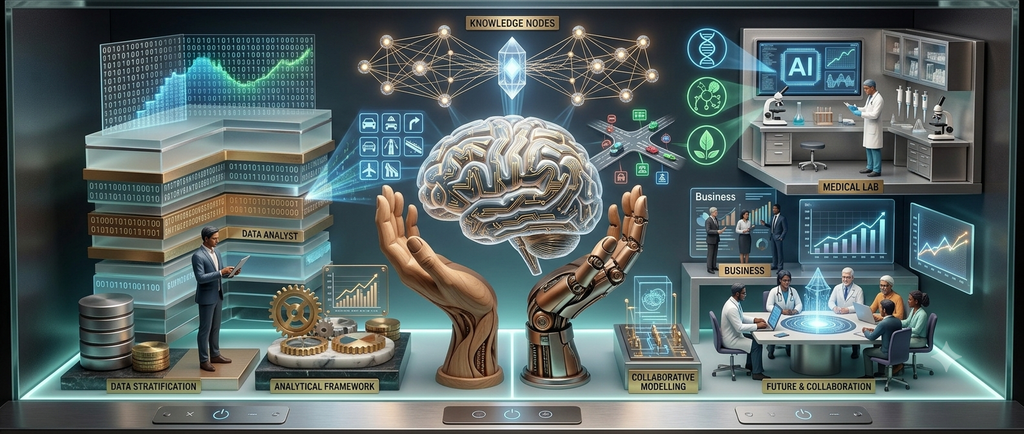
What Is Artificial Intelligence?
Artificial intelligence is a field of technology focused on creating computer systems that can perform tasks that normally require some form of human intelligence.
These tasks can include:
- Understanding language
- Recognizing images and patterns
- Learning from data
- Making predictions
- Identifying problems
- Recommending information
- Supporting decision-making
- Generating text, images, or other content
AI systems use algorithms and data to analyze information and produce an output. Depending on how they are designed, they may improve their performance by learning from previous data and examples.
For example, when a navigation application suggests a faster route, AI-related technologies can analyze information such as traffic conditions, distance, and travel patterns to help determine an appropriate route.
Why Do We Need AI?
One major reason we need AI is that modern society produces enormous amounts of information. Humans can analyze information, but there are limits to how quickly and efficiently people can process very large datasets. AI can help analyze information at a much greater scale.
Some important reasons for using AI include:
1. Handling Large Amounts of Data
Organizations and individuals generate huge amounts of digital data every day. Manually examining all of this information can take significant time.
AI can process large datasets and identify patterns or relationships that may otherwise be difficult to notice.
For example, AI can help analyze customer behavior, scientific research data, financial information, or traffic patterns.
2. Solving Complex Problems
Some problems involve thousands or millions of possible combinations and variables. AI can evaluate these possibilities and identify potential solutions.
This makes AI useful in areas such as scientific research, logistics, engineering, climate analysis, and healthcare research.
3. Automating Repetitive Tasks
Many everyday tasks are repetitive and follow predictable patterns.
AI can help automate tasks such as:
- Sorting information
- Detecting certain patterns
- Answering common questions
- Organizing documents
- Processing data
- Monitoring systems
Automation allows people to spend more time on tasks that require creativity, judgment, communication, and strategic thinking.
4. Supporting Better Decisions
AI can analyze information and provide predictions or recommendations that help people make decisions.
For example, AI can analyze weather data to help predict possible weather conditions or examine manufacturing information to identify potential equipment problems.
AI provides information and possible insights, while humans can consider context and make the final decision.
Artificial Intelligence and Problem Solving
The connection between artificial intelligence and problem solving is one of the main reasons AI is useful.
Traditional computer programs generally follow instructions created by programmers. Modern AI systems can also use data and learned patterns to identify possible answers.
A simplified AI problem-solving process can look like this:
Problem → Data → Analysis → Pattern Recognition → Possible Solution → Human Evaluation
For example, imagine a system designed to detect unusual activity in a computer network.
The system can examine network activity, compare it with known patterns, identify unusual behavior, and alert cybersecurity professionals.
The AI does not necessarily understand the problem in exactly the same way a human does. Instead, it uses algorithms, data, and patterns to identify information that may be useful for solving the problem.
How AI Helps Solve Everyday Problems
AI is not limited to large organizations or scientific laboratories. Many people interact with AI every day without thinking about it.
Search Engines
Search engines use AI-related technologies to understand search queries and provide relevant results. Instead of simply matching individual words, modern systems can consider the meaning and context of a query.
Recommendation Systems
Streaming platforms, shopping websites, and social media platforms use recommendation technologies to suggest content or products based on patterns in user activity. These systems can help users discover information more efficiently.
Navigation
Navigation applications can analyze road conditions, traffic information, and routes to provide directions and estimated travel times. AI can help identify changing conditions and recommend alternative routes.
Voice Assistants
Voice assistants use technologies such as natural language processing and speech recognition to understand spoken commands and respond to users. This allows people to interact with digital systems using everyday language.
AI in Healthcare Problem Solving
Healthcare is another area where AI can assist with complex information. AI systems can be used to analyze medical images, examine research data, identify patterns, and support certain types of clinical decision-making.
For example, researchers can use AI to analyze large datasets during drug discovery or medical research.
However, healthcare is a sensitive field, and AI-generated results should not automatically be treated as a replacement for qualified medical professionals. Human expertise remains essential when making important healthcare decisions.
AI in Education
AI can also support learning and education. Educational technologies can use AI to provide personalized learning experiences, explain concepts, generate practice questions, and identify areas where a learner may need additional support.
For example, an AI-powered learning system could analyze a student’s responses and suggest additional practice in subjects where the student is struggling. The goal is not simply to provide answers but to make learning more accessible and personalized.
AI and Business Problem Solving
Businesses face many different types of problems, from understanding customer behavior to managing inventory. AI can help analyze business data and identify trends that may support decision-making.
Some possible applications include:
- Demand forecasting
- Customer behavior analysis
- Fraud detection
- Inventory management
- Process automation
- Market analysis
- Customer support
AI can therefore become a tool for understanding complex business information and identifying possible solutions.
AI in Cybersecurity
Cybersecurity is another field where fast analysis is important. Computer networks can generate large quantities of activity data. AI can help security systems identify unusual patterns that could indicate potential threats.
For example, an AI system might detect unusual login behavior or unexpected network activity and alert security teams. This can help cybersecurity professionals investigate potential problems more quickly.
Does AI Replace Human Problem Solving?
A common concern about AI is whether it will replace human intelligence completely. AI can perform many tasks extremely efficiently, but it still has important limitations.
Humans provide qualities such as:
- Contextual understanding
- Emotional intelligence
- Creativity
- Ethical judgment
- Common sense
- Personal experience
- Responsibility for decisions
AI can produce recommendations or possible solutions, but those results may contain errors or reflect limitations in the data used to train the system.
For this reason, AI and human intelligence can work together. AI can handle data-intensive tasks while humans provide judgment, context, creativity, and oversight.
Benefits of Using AI for Problem Solving
AI can provide several potential benefits when used appropriately.
Faster Analysis
AI can process large amounts of information quickly, which can be useful when time is important.
Improved Efficiency
Automating repetitive processes can reduce the amount of manual work required.
Pattern Recognition
AI can identify patterns in large datasets that may be difficult for humans to recognize manually.
Predictive Insights
Some AI systems can use historical data to make predictions about possible future outcomes.
Support for Complex Decisions
AI can provide additional information and possible scenarios that humans can consider when making decisions.
What Are the Limitations of AI?
Understanding why we need AI also means understanding what AI cannot do perfectly. AI systems depend heavily on the quality of their data and design. Poor-quality or biased data can lead to inaccurate results.
Other challenges include:
- Incorrect or misleading outputs
- Bias in training data
- Privacy concerns
- Security risks
- Lack of human-like understanding
- Difficulty handling unusual situations
- Overreliance on automated decisions
Because of these limitations, AI should be used responsibly, especially when decisions can significantly affect people’s lives.
The Future of AI and Problem Solving
AI is continuing to develop rapidly. Future systems may become better at understanding complex information, working with different types of data, and assisting people with increasingly sophisticated problems.
AI could play an important role in areas such as scientific discovery, environmental research, robotics, healthcare, education, transportation, and cybersecurity.
However, the future of AI will not depend only on how powerful the technology becomes. Responsible development, privacy protection, security, transparency, and human oversight will also be important.
Conclusion
So, why do we need AI? The main reason is that artificial intelligence can help people handle complex information, automate repetitive work, recognize patterns, and explore possible solutions to difficult problems.
The relationship between artificial intelligence and problem-solving shows how AI can be used as a practical tool across many areas of modern life. From navigation and education to healthcare and cybersecurity, AI is already helping people work with information in new ways.
As AI continues to evolve, understanding both its capabilities and limitations will be important. New Info Technology USA provides informational technology content to help readers learn about developments such as artificial intelligence and understand how emerging technologies can influence everyday life.
Frequently Asked Questions
1. Why do we need AI?
We need AI because it can help analyze large amounts of information, automate repetitive tasks, identify patterns, make predictions, and support people in solving complex problems.
2. How does artificial intelligence solve problems?
AI can use algorithms, data, pattern recognition, and machine learning techniques to analyze a problem and generate predictions, recommendations, or possible solutions.
3. What is the connection between artificial intelligence and problem solving?
AI is designed to process information and identify patterns, making it useful for solving problems that involve large datasets, complex calculations, or repetitive processes.
4. Can AI solve every problem?
No. AI has limitations and can produce incorrect or biased results. Human judgment, creativity, context, and ethical decision-making remain important.
5. How is AI used in everyday life?
AI can be found in search engines, navigation applications, recommendation systems, voice assistants, smartphones, online platforms, and many other technologies.